Lighting & Eye Comfort

Caleb Ryan
| 18-05-2026
 · Science Team
Hours at a desk, light flickering overhead, neck starting to tense up, eyes burning slightly by mid-afternoon.
Most people blame the screen. But the lights above and around them are just as likely to be the problem — and far less often addressed.
How Ambient Lighting Sets the Foundation
Ambient lighting is the general, room-wide illumination that comes from ceiling fixtures, recessed lights, and LED panels. When it's done well, light distributes evenly across a space, reduces harsh shadows, and makes it easy to move around and see without effort. When it's too bright, it creates glare — a constant low-level visual stress that forces the eyes to work against the light rather than with it. When it's too dim, the eyes compensate by working harder to resolve details, which leads to its own version of fatigue. Dimmers are one of the most practical tools available, allowing brightness to be adjusted as natural light changes throughout the day and as activities shift.
Task Lighting for Focused Work
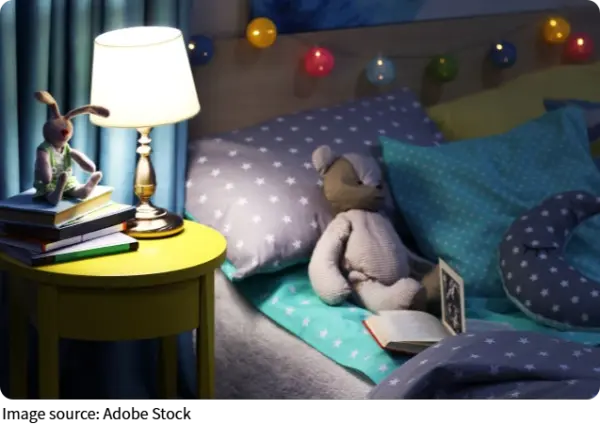
Task lighting serves a very different purpose than ambient light. A desk lamp positioned to illuminate a book, keyboard, or cooking surface directly reduces the need for the eyes to strain in order to see fine detail. The most effective task lighting avoids casting shadows across the work area, doesn't create glare on screens or reflective surfaces, and provides directed brightness without overwhelming the surrounding space. In home offices, kitchens, and reading corners, a well-placed task lamp can be the difference between two comfortable hours of work and a headache forming before lunch.
Color Temperature and How It Affects the Eyes
Color temperature, measured in Kelvin, describes how warm or cool a light appears. Lower numbers — around 2700K to 3000K — produce a warm, yellowish light that feels closer to natural firelight. Higher numbers — above 5000K — produce a cool, bluish-white light similar to daylight. From an eye-care perspective, warm color temperatures are generally more comfortable for extended periods, particularly in living spaces and bedrooms. Cool white light works well for task-focused areas but can become tiring over long exposure. For rooms where people spend significant amounts of time, staying below 4000K tends to reduce visual stress.
The Problem With Flicker and Glare
Not all light is steady. Fluorescent bulbs and some lower-quality LEDs flicker at frequencies that are too fast to consciously perceive, but the visual system still responds. The eyes and brain spend continuous effort compensating for the rapid changes in intensity, which accumulates into fatigue, headaches, and in some people, migraines. Glare — whether from a bare bulb, a reflective surface, or light hitting a screen — creates a similar invisible tax on the visual system. It forces constant squinting and readjustment. High-quality LEDs labeled as "flicker-free" and positioned to avoid direct glare solve both of these problems at once.
Smart Lighting and Sleep Patterns
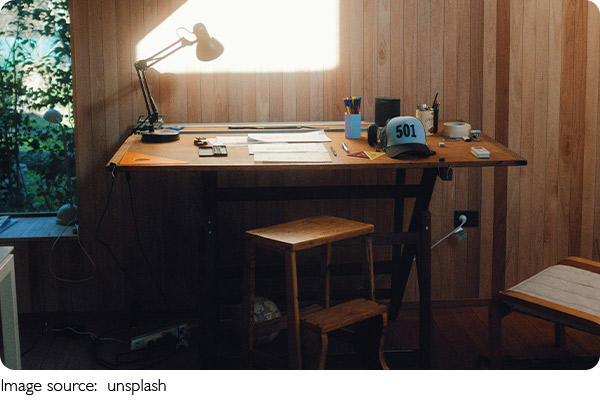
The body's circadian rhythm — its internal 24-hour clock — responds directly to light. Blue-rich light signals wakefulness and suppresses melatonin. Warm, dim light signals the approach of evening and supports the transition toward sleep. Smart lighting systems that automatically shift color temperature throughout the day can meaningfully support this natural cycle: cooler and brighter in the morning, gradually warmer and dimmer as evening approaches. For people who struggle with sleep or afternoon energy crashes, lighting that works with the body's rhythm rather than against it makes a practical, low-effort difference that requires no behavioral change at all.