Rise Higher

Lucas Schneider
| 18-05-2026
 · Art Team
Standing on the tips of your toes sounds like one of those things that should be impossible.
And physiologically, it kind of is — unless the right muscles, habits, and alignment are all pulling in the same direction.
Pointe work in ballet is one of the most demanding physical skills in any art form. The good news is that every bit of it is trainable.
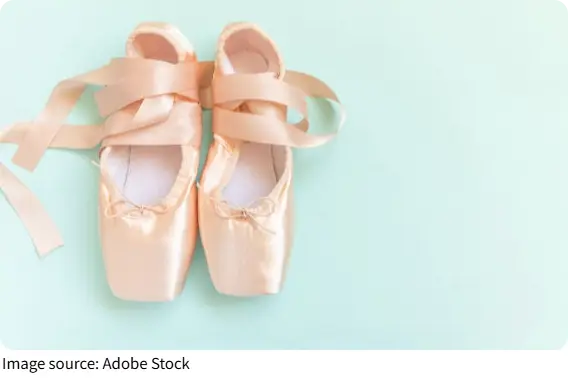
The Foundation Is the Whole Body
Balance en pointe isn't about the feet in isolation. It starts with the core. Without deep abdominal and back engagement, even strong feet will wobble. Think of the core as the anchor — it stabilizes the torso so the legs and feet can do their precise work without the whole system swaying. Planks, Pilates, and targeted core exercises off the barre directly improve stability on pointe, not just posture in daily life.
Relevés Are the Fundamental Tool
The single most effective daily exercise for building pointe strength and stability is the relevé. Start in first position, rise onto the balls of the feet — or the platform of pointe shoes if you're already there — hold for a count, then lower with full control. The lowering phase matters as much as the rise; rushing it bypasses the calf and ankle work that creates lasting strength. Progress to single-leg relevés at the barre once double-leg feels solid. Twenty reps on each leg, built up gradually, will change the ankle's endurance over weeks.
Foot Alignment Is Everything
Rising with the ankle rolling inward (pronation) or outward places the entire weight on the wrong part of the foot and strains the joint. The ankle, knee, and hip need to track in a clean vertical line on the way up and on the way down. Practicing in front of a mirror helps catch subtle rolling that the body can't feel yet. Over time, correct alignment becomes automatic — but early on, visual feedback is essential.
Strengthen the Intrinsic Foot Muscles
The small muscles inside the foot — the ones that create the arch and control toe placement — are often underdeveloped, even in dancers with strong calves. Resistance band exercises, toe-scrunching drills with a towel on the floor, and the "doming" exercise (lifting the arch while keeping toes flat and grounded) target these muscles specifically. They're the reason some dancers have a clean, stable pointe even at high relevé, and others collapse. Two focused sets daily builds more than one long weekly session.
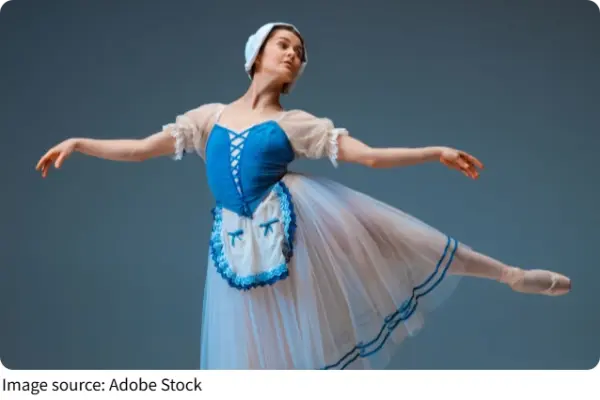
The Big Toe Carries More Weight Than You Think
In any relevé or pointe position, the big toe is a primary contact and stability point. Strengthening it specifically — by pressing it gently into the floor against resistance — builds the kind of grip that holds a clean line. A collapsed or passive big toe is one of the most common reasons pointe work looks uneven or falls apart mid-balance. It's a small thing that makes a large visual difference.
Core, Ankle, and Eye Work Together
Sustained balances on pointe demand everything at once: core engaged, ankle stable, weight correctly placed, and gaze fixed. The vestibular system — the inner ear that coordinates balance — improves with practice. Spotting a fixed point on the wall during static balances trains this system deliberately. Over time, the body learns to micro-adjust in real time, and what once felt like fighting gravity starts to feel natural.
Pointe readiness isn't just about feet. It's about whether the whole body is ready to hold itself up with precision, control, and — eventually — apparent ease.