Makes Ballet Beautiful

Mason O'Donnell
| 18-05-2026
 · Art Team
There's a specific moment in watching a great ballet dancer that's hard to describe but instantly recognizable.
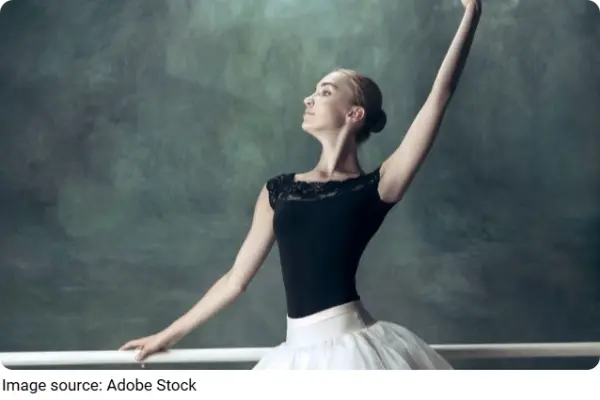
It's when the body stops looking like a person trying to execute a movement and starts looking like a single unbroken shape — from fingertip to pointed toe, every curve and straight line flowing as though gravity is a suggestion.
That quality is called line. And while it takes years to develop fully, every dancer can work toward it deliberately.
What Line Actually Means
In ballet, "line" refers to an imaginary continuous path that runs through the body — from fingertips through the arms, across the shoulders, down the spine, through the leg, and out to the pointed toe. A good line has no visual interruptions: no jutting elbows, no collapsed arch, no dropped wrist. It can be curved or straight — both are valid — but it must be unbroken. The arabesque is the most discussed example, but line applies to every single position in ballet, including standing still.
Alignment Is the Architecture Underneath
Line starts with alignment. The spine needs to be vertically stacked rather than tilted; the pelvis in neutral rather than tucked or tipped; the ribcage sitting directly above the pelvis rather than flared forward. These structural habits sound dry, but they're the reason some dancers make every position look effortless and others struggle to make even simple moves look clean. A useful image: imagine the joints stacked like building blocks, each one balanced directly above the last. When that's working, the body moves without fighting itself.
The Core Creates the Canvas
Engaging the deep stabilizing muscles of the core — the transverse abdominis, the pelvic floor, the deep back muscles — is what allows the limbs to extend freely without the torso collapsing or compensating. Core strength in ballet isn't about visible abs; it's about an internal corset that holds everything steady so the arms and legs can create their shapes without pulling the center off-balance. Planks and Pilates-inspired exercises that build deep stability, rather than surface tension, are the most direct training for this.
Leg Placement Over Height
One of the most common line-breaking habits in young dancers is prioritizing how high a leg goes over where it actually is. A développé that reaches only ninety degrees but holds perfect turnout, alignment, and a clean foot creates a more beautiful line than one that reaches above the ear with a rolling ankle and collapsed hip. Quality of placement always reads better from the audience than raw height. Focus on the placement first; the height follows naturally as strength develops.
Watch, Then Internalize
Studying videos and live performances with specific attention to line — not just steps — is one of the fastest ways to develop an eye for it. Once you can recognize what a good line looks like in others, you can start identifying it (and its absence) in your own body using a mirror. Tactile awareness also helps: placing a hand on your own leg or arm during slow practice sharpens the body's sense of where each limb actually is versus where it feels like it is.
Posture Doesn't End at Class
The way a dancer carries themselves outside the studio transfers directly into their dancing. Standing well, sitting without slouching, walking with length through the spine — these habits reinforce the muscle memory that makes upright, open, graceful alignment feel natural on stage rather than effortful. The body learns what it does most often.
Line is never fully finished. Even principal dancers spend careers refining it. But every time alignment improves, every time the core holds more steadily, every time a foot points a little cleaner — the line gets closer to unbroken.