Breath Control in Ballet

Chris Isidore
| 18-05-2026
 · Art Team
Ask most dancers what they're working on and they'll mention turnout, flexibility, or a tricky combination. Ask if they're working on their breathing, and you'll usually get a blank look.
But breath is quietly running through every moment of dancing — shaping how movements begin, how phrases flow, how the body manages tension, and how a performance reads from the front row.
Why Breath Gets Ignored
Ballet training places enormous emphasis on alignment, strength, and technique — and rightfully so. But in the process, many dancers develop a habit of holding their breath, particularly during difficult or unfamiliar combinations. The result is tightened muscles, stiffened movement, and a visible tension that technique alone can't fix. Controlled, conscious breathing releases this tension and allows the body to move the way it's been trained to.
Diaphragmatic Breathing as a Foundation
The most useful form of breathing for dancers is diaphragmatic — sometimes called lateral or ribcage breathing. Instead of shallow chest breathing that lifts the shoulders and restricts the core, ribcage breathing expands the lower ribs outward on the inhale, drawing more air in without disrupting the upper body's alignment. Place both hands on the sides of the ribs to feel this: the distance between your hands should increase with each inhale. Practicing this off the barre, lying down or sitting, until it becomes the default pattern is one of the best investments in technique a dancer can make.
Box Breathing for Focus and Calm
Before an intense rehearsal or an audition, box breathing is a reliable tool. Inhale for four counts, hold for four, exhale for four, hold again for four. The rhythm settles the nervous system, sharpens focus, and prevents the shallow stress breathing that makes movements tight and rushed. It takes about two minutes and can be done anywhere backstage, in the wings, or in the studio corner. Consistency matters — this works best when it's already a habit before a high-pressure moment arrives.
Breath Initiates Movement
The most expressive dancers don't just breathe between steps — they breathe into them. An inhale at the start of a port de bras lifts and opens the movement naturally. An exhale during a développé softens and lengthens it. Breath timing, matched to the music's phrasing, gives movement a quality of ease and inevitability that can't be faked through pure mechanics. In adagio sections especially, breath is the invisible structure that makes slow, sustained movement look controlled rather than labored.
Match Your Breath to the Tempo
In rehearsal, try pacing your breathing to the actual music being used. Fast allegro sections require quick, efficient breaths in transition moments. Adagio phrasing allows longer, fuller inhales and exhales that can shape the quality of the movement. Practicing this rhythmic connection repeatedly builds muscle memory, so when performance pressure makes conscious thought difficult, the body already knows when to breathe.
Group Breathing in Ensemble Work
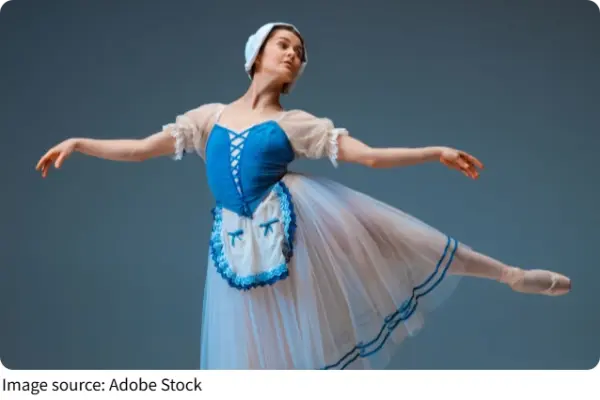
In corps or ensemble sections, synchronized breathing is one of the most effective tools for unison. When dancers in a group are matching their inhalations at the start of a phrase, the initiation of movement becomes naturally simultaneous — more effectively than counting alone. The subtle physical synchrony that comes from shared breath is visible from the audience in a way that's difficult to name but impossible to miss.
Breath is the one technique that costs nothing, requires no equipment, and can be improved starting today. It just requires the rare decision to actually pay attention to it.