Beyond the Steps

Lucas Schneider
| 18-05-2026
 · Art Team
There's a reason certain performances stay with you long after you've left the theater. It's rarely the technical perfection — it's the moment when a dancer makes you feel something.
The arabesque that reads as longing. The quick jeté that signals defiance. The soft fold of an arm that says grief without a single word. Ballet's entire expressive vocabulary lives in the body, and learning to use it is a different skill from learning to dance.
Every Movement Is a Sentence
In ballet, physicality carries the narrative. A simple position can communicate longing, defiance, tenderness, or fear depending on how it's initiated, held, and released. Dynamics — the speed, weight, and energy behind each movement — shift meaning entirely. The same arabesque executed with sharp energy reads as fierce; the same position held with suspension and softness reads as yearning. Understanding the expressive range of movement, not just its technical execution, is what separates a technician from a performer.
The Face Is the First Thing Seen
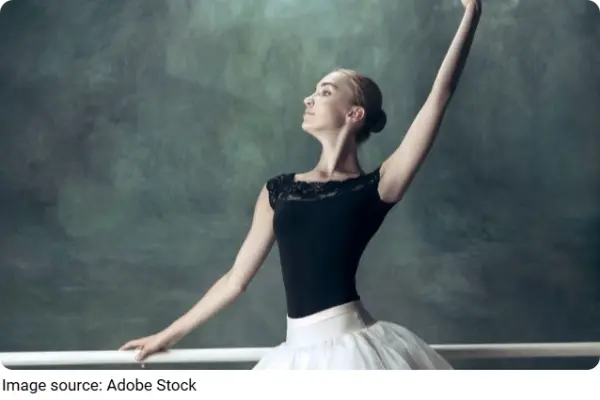
Audiences read the face before registering the feet. A technically flawless phrase delivered with a blank or distracted expression loses more than half its impact. Conversely, a simple phrase performed with genuine, specific expression draws the eye and communicates clearly across a large theater. Practicing in front of a mirror or recording rehearsals lets a dancer observe how their expression lands — whether it matches the music's mood, and whether it reads as authentic or forced.
Eye Contact and Direction of Gaze
Where a dancer looks tells the audience where to look and what to feel. In ensemble sections, eye contact between performers creates a sense of relationship and shared story. In solo work, directing the gaze outward toward the audience — rather than fixed on the floor or unfocused in the middle distance — projects confidence and draws viewers into the performance. Even in abstract ballet without a narrative, gaze direction shapes how the audience experiences space and energy.
The Details in the Hands
In theatrical traditions, specific hand gestures carry defined meanings — a hand to the heart for love, an open palm extended for supplication. In contemporary and classical ballet alike, the hands complete the line of the arm and signal the emotional quality of a phrase. Passive or limp hands undercut even beautiful arm work; hands that are too tense break the line and read as stiff. Soft, articulate, responsive hands are something most dancers have to practice deliberately rather than pick up automatically.
Commit to the Story, Not the Steps
One of the most common performance habits is thinking about the upcoming steps during a phrase rather than living inside the current one. When dancers are mentally a count ahead, the body language shifts — the gaze wanders, the initiation of movement loses its spontaneity, and the quality of presence disappears. Staying inside the character or emotional intent of each phrase, even during technically demanding sections, is a skill built through rehearsal with that specific intention in mind.
Authenticity Over Demonstration
The most powerful stage presence comes from genuine investment in what the dance communicates, not from performing an idea of what emotion should look like. Audiences sense the difference immediately. A dancer who understands the story they're telling — who has found a personal connection to its themes — moves differently than one executing a choreographed emotional display. That's why the best training includes the inner work, not just the physical.
Every movement is a word. Every phrase is a sentence. The whole performance is a conversation with the audience — and like any conversation, it only works when both sides are actually present.