Raccoon Wonders

Arvind Singh
| 16-03-2026
 · Animal Team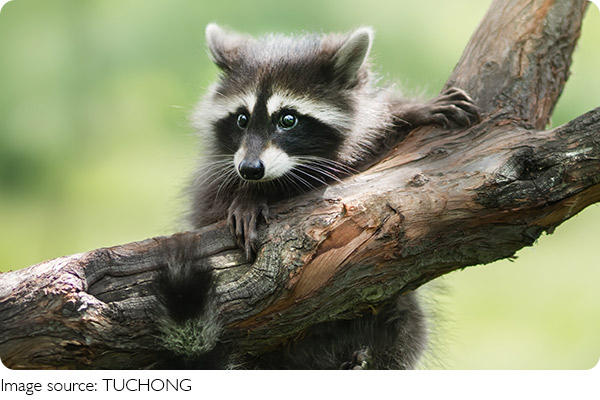
Raccoons are unmistakable wild mammals: nocturnal, curious, and often seen on social feeds balancing on fence tops or rummaging through backyard bins.
Yet beyond memes and viral photos lies an animal with remarkable adaptability, sensory precision and surprising intelligence.
From their “masked” appearance to clever problem solving skills, raccoon biology and behaviour speak volumes about how wildlife thrives alongside and beyond human spaces.
What Makes a Raccoon a Raccoon?
At first glance, a raccoon's most distinctive feature may be its bandit like mask and ringed tail. These markings are more than aesthetic — the dark fur around the eyes is believed to help reduce glare and enhance night vision, an advantage for an animal primarily active after dusk. Their scientific name, Procyon lotor, reflects part of their behaviour: lotor means “washer,” linked to the once noted habit of dousing food in water before eating, though the true purpose of this behaviour remains linked to tactile sensitivity rather than cleanliness.
Raccoons grow to about 23.75 to 37.5 inches from nose to tail, and while they don't hibernate in winter, they may slow down and spend extended periods in dens when temperatures drop.
1 Exceptional Skills and Senses
Raccoons are more than cute forest dwellers; they are highly skilled wild mammals. Their front paws are extremely sensitive, with four to five times more sensory cells than other parts of their body. This enables them to explore, manipulate and identify objects without seeing them — a remarkable adaptation for nocturnal foragers.
1. Dexterity: Their paws resemble human hands and can open jars, unlatch containers or turn objects while searching for food.
2. Climbing & Swimming: Excellent climbers, raccoons readily scale trees, and while not frequent swimmers, they can navigate water to forage or evade danger.
3. Night Vision & Touch: The raccoon's sensory system emphasizes touch and night vision, allowing it to forage efficiently in darkness.
These adaptations help raccoons thrive in both forests and urban environments, where agility and curiosity are key to finding food and shelter.
Highly Adaptable and Intelligent
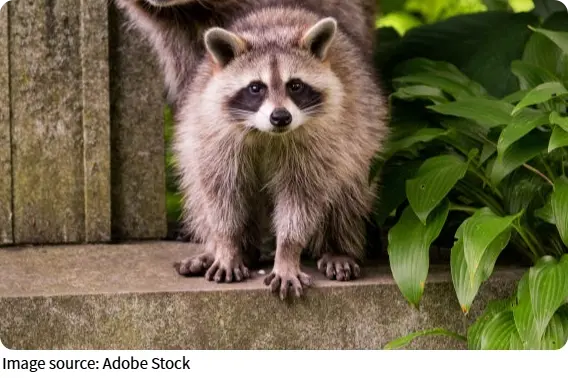
One of the most surprising aspects of raccoons is their adaptability. They flourish in a variety of habitats — from woodlands and wetlands to suburban neighbourhoods and urban centres. Unlike many wildlife species that retreat from human development, raccoons exploit new environments with remarkable ease.
Researchers have observed that urban raccoons can outperform rural ones when tackling man made challenges. For example, in experiments involving closed trash cans, city raccoons quickly learned to open lids to reach food inside — a demonstration of learning, memory and situational problem solving.
Their intelligence is further evident in social learning and maternal teaching: young raccoons often mimic the foraging behaviour of adults, improving their chances of survival.
Survival Through Behaviour and Flexibility
Although raccoons are omnivores — eating fruits, nuts, insects and small aquatic animals — their ability to adapt diet and habitat to available resources sets them apart. They may raid vegetable gardens, forage through trash bins or explore natural sources such as streams for crayfish and frogs.
This flexibility, combined with their nocturnal lifestyle, helps raccoons navigate challenges posed by climate, competition and human activity. While many young raccoons may not survive harsh winters, adults can often endure seasonal changes by adjusting behaviour and seeking shelter.
Reflection: Learning from a Clever Survivor
Raccoons challenge many assumptions about wildlife. They are not just night time scavengers; they are problem solvers, explorers and adaptable survivors. Their physical and behavioural adaptations — from sensitive paws to ingenious foraging strategies — reflect an evolutionary success story. Observing raccoons reminds us that intelligence and adaptability are not exclusive to primates or larger mammals but can be found across the animal kingdom in forms both unexpected and inspiring.
In a world where human development alters natural habitats, the raccoon offers a compelling example of how wildlife can not only persist but thrive when given opportunities to adapt. Their story encourages respect for wild intelligence and coexistence with nature's resourceful creatures.