Fascinating Flamingo Facts

Liam Reilly
| 11-03-2026
 · Animal Team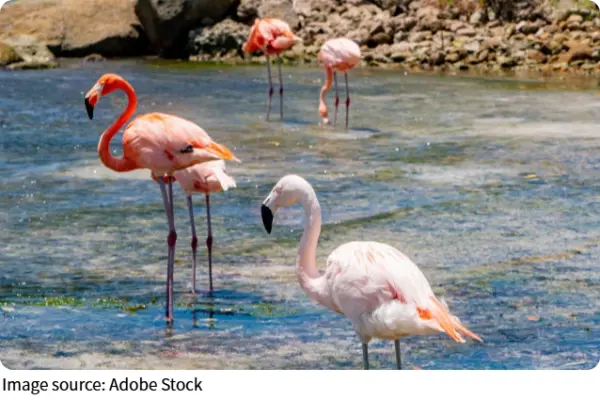
Few birds capture attention as quickly as flamingos.
With their long legs, curved necks, and bright pink feathers, they often appear almost unreal when seen standing in shallow lakes or lagoons.
Groups of flamingos create a striking image as hundreds of birds gather together, reflecting soft shades of pink across the water.
However, flamingos are much more than visually impressive birds. Their color, feeding style, and social behavior reveal fascinating biological adaptations. By understanding how flamingos live and thrive in their natural habitats, we can appreciate the remarkable ways nature shapes animals for survival.
Why Flamingos Are Pink
One of the most famous features of flamingos is their vibrant pink color. Interestingly, flamingos are not born pink. Young flamingos usually hatch with gray or white feathers.
Their color develops gradually through diet. Flamingos eat small aquatic organisms such as algae, shrimp-like creatures, and other tiny animals that contain pigments called carotenoids. These natural pigments accumulate in the bird's feathers, skin, and even beak, creating the well-known pink color. According to National Geographic, the more pigment-rich food a flamingo consumes, the deeper its pink shade becomes.
Key dietary sources of flamingo color:
1. Blue-green algae found in shallow lakes
2. Tiny crustaceans living in salty water
3. Small aquatic insects and larvae
This diet-based coloring is similar to how certain foods can influence coloration in other animals.
A Unique Way of Eating
Flamingos have one of the most unusual feeding techniques in the bird world. Instead of pecking at food like many birds, flamingos filter food from water using their specially shaped beaks.
Their beaks are bent downward and contain comb-like structures called lamellae. These structures act like a natural sieve that separates food particles from water.
Typical feeding process:
1. The flamingo lowers its head upside down into the water.
2. It sweeps its beak side to side through mud and shallow water.
3. The tongue pumps water through the beak.
4. Lamellae filter out tiny organisms for food.
This highly specialized feeding method allows flamingos to thrive in environments where few other birds can easily obtain food. According to Britannica, flamingos often feed in alkaline or salty lakes where small organisms flourish.
Life in Large Social Groups
Flamingos are extremely social birds. Rather than living alone or in small families, they gather in massive groups called colonies. Some colonies contain thousands of individuals standing together along the edges of shallow lakes.
Living in large groups offers several advantages.
Benefits of colony living:
1. Increased protection from predators through group vigilance
2. Better chances of finding suitable nesting areas
3. Improved breeding success through synchronized nesting
Researchers have also observed that flamingos perform group displays when preparing for breeding. These coordinated movements include head turning, wing spreading, and marching together. These displays help strengthen pair bonds and encourage synchronized nesting within the colony.
Remarkable Nest Building
Flamingos have a unique approach to nest construction. Instead of building nests from sticks or grass, they create small mud towers.
These cone-shaped nests are usually built in shallow water or along muddy lake shores. Each nest forms a small mound with a hollow top where a single egg is placed.
Typical flamingo nesting process:
1. Gather wet mud using the beak.
2. Pile the mud into a mound several inches high.
3. Shape a shallow depression at the top.
4. Lay one egg and take turns incubating it.
Raising the nest above the surrounding water helps protect the egg from flooding and overheating in hot climates.
The Famous One-Legged Stance
Many people notice that flamingos often stand on one leg. Scientists believe this behavior helps conserve body heat and reduce muscle fatigue.
Water in flamingo habitats can sometimes be cool, and standing on one leg reduces heat loss by limiting the amount of body surface touching the water. This energy-saving posture also allows the bird to rest its muscles while remaining balanced.
Interestingly, flamingos can remain stable on one leg for long periods without losing balance.
Where Flamingos Live
Flamingos are commonly found in warm regions around the world. They inhabit shallow lakes, coastal lagoons, and wetlands where algae and small aquatic animals are abundant.
These habitats often contain high levels of salt or minerals. While such conditions may be harsh for many animals, flamingos have adapted to thrive in these environments.

Typical flamingo habitats include:
1. Salt lakes
2. Coastal lagoons
3. Mudflats and wetlands
4. Shallow inland lakes
These ecosystems provide both feeding opportunities and safe nesting areas.
Conclusion
Flamingos are a perfect example of how animals evolve specialized traits to survive in challenging environments. Their unique beaks allow them to filter microscopic food, their diet gives them their iconic color, and their social colonies improve breeding success.
Watching a group of flamingos standing quietly in shallow water can feel almost peaceful and surreal. Their graceful shapes and coordinated movements remind us that nature often combines beauty with clever biological design. By learning more about flamingos, we gain a deeper appreciation for the delicate balance that allows wildlife to thrive in some of the planet's most unusual habitats.